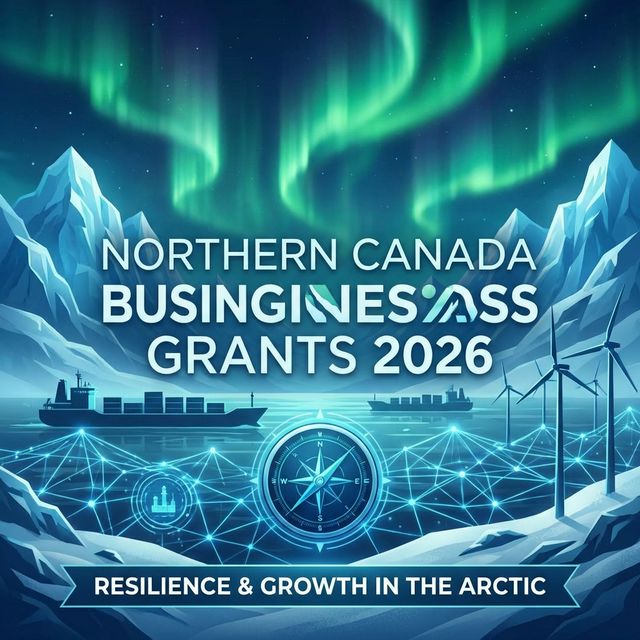
Northern Canada Business Grants 2026 | $30M+ Territorial Funding
How can my business apply for Northern Canada Business Grant 2026 in 2026?
The Short Answer: To apply for Northern Canada Business Grant 2026, start by reviewing the eligibility criteria and preparing a project proposal. 🇨🇦 Business in the North is unique. Explore grants for Yukon, NWT, and Nunavut from CanNor, territorial governments, and Indigenous organizations. Funding available: up to $30.

Disclaimer: Program guidelines and funding pools are subject to change by administering agencies. Information provided is for research and estimation purposes only and does not constitute guaranteed funding approval.
AI Summary & Key Takeaways
- Overview: A comprehensive guide covering the latest updates, funding amounts, and application strategies for Northern Canada Business Grants 2026 | $30M+ Territorial Funding.
- Category Focus: This essential research brief targets government funding and explores funding impacts related to business growth.
- Actionable Intelligence: Readers will discover verified eligibility requirements, internal program mechanics, and timeline expectations within this concise 15 min read read.
"Am I Eligible?" Micro-Quiz
Take 10 seconds to answer these questions and instantly see if you meet the baseline criteria for this funding.
Quickly compare the highest-value funding options available.
| Program Name | Max Amount | Equity Req. | Best For | Timeline |
|---|---|---|---|---|
| Core Northern Canada Business Grants : Arctic Opportunity Grant | $30 | Non-dilutive | Eligible Applicants | Standard Review |
| Related Provincial Match | Up to 50% | 0% | Expansion Projects | 45 Days |
| Federal Support Program | Varies | Non-dilutive | Scaling Businesses | 90 Days |
Logistics Costs
❄️ The North: Canada's Last Frontier for Business
Operating in Yukon, NWT, or Nunavut comes with unique challenges—and unique funding. The federal government, through CanNor , and territorial governments pour money into the North to diversify the economy beyond mining.
🏛️ CanNor: The Federal Engine
The Canadian Northern Economic Development Agency(CanNor) is the Regional Development Agency for the territories. Their flagship is IDEANorth.
IDEANorth
The main community and business development fund.
- ✅ Funds foundational infrastructure(e.g., community freezers, tourism facilities)
- ✅ Sector development(e.g., arts & crafts marketing, tourism capacity)
- ✅ Available to businesses, non - profits, and Indigenous organizations
NHEI(Northern Hydrocarbon Energy Initiative)
Helping the North get off diesel.
- ✅ Renewable energy installations
- ✅ Energy efficiency retrofits
- ✅ Biomass, solar, and wind projects
Recommended self-serve next step
Move from grant research to one useful outcome
Instant digital delivery. No sales call, live session, or consultation is required.
Funding Match Report
Recommended hereSee matched programs, estimated ranges, requirements, and priority order.
🏔️ Yukon: The EDF
The Yukon Economic Development Fund(EDF) is one of the most flexible funds in the North.
EDF Highlights
- Strategic Industries: Mining, Film, and Tourism are priorities
- Tech: TechYukon provides marketing and export support for digital businesses
- Flexibility: Can cover equipment, training, and even travel costs
🏜️ NWT: SEED Policy
The SEED Policy (Support for Entrepreneurs and Economic Development) is the NWT's main small business program.
In grants for equipment, marketing, and operational costs.
🐻❄️ Nunavut: NDC & SIP
The Nunavut Development Corporation(NDC) invests equity in businesses that create jobs for Nunavummiut.
- The Strategic Investments Program(SIP) offers grants for startups and expansions.
- Priority is given to Inuit - owned businesses.
- Focus on local job creation and community benefit.
❓ Frequently Asked Questions
Is SEED funding available year - round ? ▼
Yes, but it's first-come, first-served. The budget often runs out by late fall, so apply early in the fiscal year (April 1st).
Do I need an Indigenous partner ? ▼
Not strictly for all grants, but for major projects(especially on Indigenous land), a Joint Venture(JV) with an Indigenous Development Corporation is highly advantageous.
What about the high cost of energy ? ▼
Look into the Arctic Energy Fund . It helps businesses and communities switch from diesel to solar, wind, or biomass heating.
NRC IRAP Application Toolkit
We package the complete document toolkit required to prepare your applications. Get instant access to:
- NRC IRAP Proposal Outline Checklist
- ITA Introduction Staging Playbook
- SME R&D Salary Subsidy Spreadsheet
- Project Commercial Potential Framework