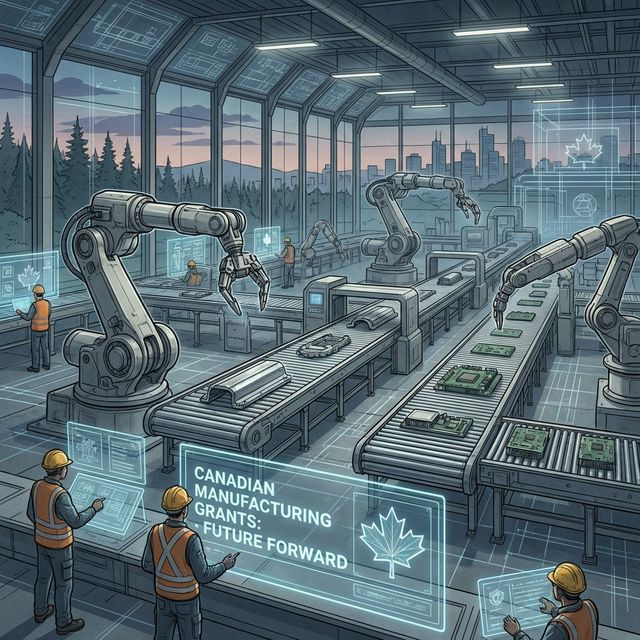
Manufacturing Grants 2025: $2.3B Industrial Renaissance
The Short Answer: American manufacturing is booming with $2.3 billion in grants for automation, reshoring, and workforce development. Total funding available: $2.3B.


Automate to Compete
π Manufacturing Grants 2025: America's $2.3B Industrial Renaissance
π Top Manufacturing States by Funding
- β’ Ohio: $340M allocated (automotive/steel) - 87% success
- β’ Michigan: $289M allocated (EV transition) - 84% success
- β’ Texas: $267M allocated (aerospace/energy) - 91% success
- β’ Pennsylvania: $234M allocated (steel/chemicals) - 79% success
- β’ North Carolina: $198M allocated (textiles/furniture) - 83% success
π° 2025 Manufacturing Grant Ecosystem
- β’ Manufacturing Extension Partnership: $156M federal
- β’ Advanced Manufacturing Jobs Program: $45M
- β’ Reshoring Initiative Grants: $78M available
- β’ Success rate: 76% with industry partnerships
- β’ 250,000+ manufacturing companies nationwide
American manufacturing is experiencing its greatest renaissance since World War II, with $2.3 billion in federal and state grants specifically targeting advanced manufacturing, reshoring initiatives, and Industry 4.0 transformation. With manufacturing contributing $2.3 trillion to GDP and employing 12.8 million Americans, these programs represent the largest coordinated effort to rebuild America's industrial base and compete with global manufacturing powers.
π― Federal Manufacturing Grant Programs
ποΈ NIST Manufacturing Extension Partnership (MEP)
π° Program Structure
- β’ Federal funding: $156M annually
- β’ State/local match required
- β’ 51 MEP Centers nationwide
- β’ Average project: $45,000
- β’ ROI: $19 return per $1 invested
π― Services Provided
- β’ Lean manufacturing implementation
- β’ Supply chain optimization
- β’ Cybersecurity assessments
- β’ Workforce development
- β’ Export market development
π 2024 Results
- β’ Companies served: 29,000+
- β’ Jobs created/retained: 89,000
- β’ New sales generated: $16.2B
- β’ Cost savings: $2.3B
- β’ Investment facilitated: $4.8B
π° Industry 4.0 Technology Grants
π€ Smart Manufacturing Innovation - $890M Allocated
π§ Automation Technologies
- β’ Industrial IoT implementation: $234M
- β’ Robotic process automation: $189M
- β’ AI quality control systems: $167M
- β’ Digital twin development: $145M
- β’ Predictive maintenance: $155M
π Data & Analytics
- β’ Manufacturing execution systems
- β’ Supply chain visibility platforms
- β’ Quality management software
- β’ Energy management systems
- β’ Cybersecurity infrastructure
π― Success Metrics
- β’ Productivity gains: 25-40%
- β’ Quality improvements: 50-90%
- β’ Energy savings: 15-25%
- β’ Downtime reduction: 30-50%
- β’ ROI timeline: 18-36 months
π Manufacturing Success Stories
General Motors Factory ZERO
$89M Advanced Manufacturing Grants + State incentives
Electric Vehicle Manufacturing
"The transformation of our Detroit-Hamtramck plant into Factory ZERO represents the future of American automotive manufacturing. Federal and state grants enabled us to install cutting-edge EV production technology while retaining 2,200 jobs in Detroit's urban core."
β’ Total investment: $2.6 billion
β’ Jobs retained: 2,200
β’ New technology jobs: 500
β’ Average wage: $71,000
β’ Autonomous guided vehicles
β’ Advanced robotics integration
β’ Zero-waste-to-landfill facility
β’ 100% renewable energy powered
β’ Multiple EV models
β’ 300,000+ vehicles annually
β’ Battery pack assembly
β’ Supply chain optimization
π Reshoring & Supply Chain Grants
Post-pandemic supply chain disruptions have created $500M+ in reshoring incentives for manufacturers moving production back to the United States. These programs specifically target companies reducing dependence on overseas suppliers.
CHIPS Act Funding
- β’ $39B for semiconductor manufacturing
- β’ 25% investment tax credit
- β’ R&D facility construction grants
- β’ Workforce training support
Defense Production Act
- β’ Critical minerals processing
- β’ Medical supply manufacturing
- β’ Battery component production
- β’ Priority contracts for reshoring
EDA Tech Hubs
- β’ $10B regional technology hub program
- β’ Cluster-based manufacturing zones
- β’ Workforce ecosystem development
- β’ Infrastructure modernization
π Application Strategy for Manufacturers
β Manufacturing Grants FAQ
Can small manufacturers (under 50 employees) apply?
Absolutely. MEP centers specifically serve small and mid-sized manufacturers (SMMs) with under 500 employees. Many programs have set-asides for businesses under $50M in revenue. Small manufacturers often have higher approval rates because they can demonstrate clearer impact per dollar invested.
Do I need to match grant funds?
Most manufacturing grants require a cost-share or match, typically 1:1 (dollar for dollar). The match can include cash investment, in-kind contributions (equipment, facilities), or private financing. Some workforce training grants have lower match requirements of 25-30%.
Can I use grants for equipment purchase?
Yes β equipment purchase is one of the most common uses. Programs like NIST MEP, state capital investment grants, and USDA rural manufacturing grants frequently cover CNC machines, robotics, 3D printers, and other capital equipment. CHIPS Act funding can cover fab equipment for semiconductor manufacturers.
What about workforce training grants?
Workforce training is heavily funded across all levels. The DOL's Registered Apprenticeship program, state-specific incumbent worker training grants, and community college partnerships are all available. Manufacturing companies can receive $5,000-$10,000 per employee for upskilling and reskilling programs.
ποΈ Inflation Reduction Act (IRA) Manufacturing Incentives
The IRA created $60 billion in manufacturing-specific tax credits and grants β the largest industrial policy investment since WWII. Manufacturers in clean energy supply chains benefit most.
Advanced Manufacturing Credit (45X)
- β’ Solar cells: $0.04/W credit
- β’ Battery cells: $35/kWh credit
- β’ Critical minerals: 10% production cost
- β’ Inverters: $0.11/W credit
- β’ Wind components: various rates
48C Tax Credit ($10B)
- β’ 30% credit for facility investments
- β’ Clean energy manufacturing equipment
- β’ EV, battery, hydrogen facilities
- β’ Critical minerals processing
- β’ 40% allocated to energy communities
DOE Loan Programs
- β’ Title 17: Up to $40B authority
- β’ ATVM: $17B for auto manufacturing
- β’ Below-market interest rates
- β’ 25+ year loan terms available
- β’ Tesla's $465M success story
π· Manufacturing Workforce Development Grants
With 2.1 million manufacturing jobs projected to go unfilled by 2030, federal and state workforce grants are crucial for manufacturers competing for skilled labor.
Federal Programs
- β’ DOL Apprenticeship: $285M for registered programs
- β’ DOL H-1B Training: $150M+ for tech skills
- β’ ETA Dislocated Workers: State formula grants
- β’ NSF ATE: $75M for community colleges
- β’ Good Jobs Challenge: $500M (EDA)
State Programs (Top States)
- β’ Ohio: $28M TechCred program
- β’ Michigan: Going PRO Training Fund
- β’ Indiana: Next Level Jobs (free certifications)
- β’ PA: WEDnet ($5,000/employee)
- β’ Texas: Skills Development Fund ($85M)
π Export Assistance for Manufacturers
US manufacturers that export grow 8.5% faster and create 2x more jobs than non-exporters. Multiple federal programs help manufacturers enter global markets.
SBA STEP Grants
- β’ State Trade Expansion Program
- β’ Up to $5,000/company for trade shows
- β’ Website translation subsidies
- β’ Export compliance training
- β’ Market research funding
EXIM Bank Tools
- β’ Working capital guarantees (90%)
- β’ Export credit insurance
- β’ Direct loans to foreign buyers
- β’ Small business (under $10M revenue) priority
- β’ No minimum transaction size
π€ Industry 4.0 and Smart Manufacturing Grants
The rise of Industry 4.0 β the integration of IoT sensors, artificial intelligence, robotics, and cloud computing into manufacturing processes β has created an entirely new category of federal funding. The National Institute of Standards and Technology (NIST) alone has allocated over $300 million through its Manufacturing Extension Partnership (MEP) network specifically for digital transformation projects. Manufacturers that adopt Industry 4.0 technologies see average productivity gains of 17-20%, reduced defect rates by 50%, and lower overall operating costs by 15-30%.
The Commerce Department's Manufacturing USA network includes 17 innovation institutes, each focused on a specific advanced manufacturing technology. These institutes offer cost-shared projects where manufacturers can access cutting-edge research, pilot production lines, and workforce development programs. For example, the Digital Manufacturing and Design Innovation Institute (DMDII) in Chicago provides $10-50K vouchers for small manufacturers to implement digital twins, predictive maintenance systems, and automated quality inspection. The Advanced Robotics Manufacturing Institute (ARM) in Pittsburgh offers similar programs for collaborative robotics and automation integration.
To qualify for Industry 4.0 grants, manufacturers typically need to demonstrate at least one year of operational history, a strategy for technology integration, and a workforce development plan showing how employees will be trained on new systems. The typical application takes 4-6 weeks to prepare and 2-3 months for review. Companies in rural areas and those owned by minorities, veterans, or women receive priority consideration under several programs.
πΏ Environmental Compliance and Green Manufacturing Grants
Environmental compliance is increasingly a prerequisite for manufacturing grants. The EPA's Pollution Prevention (P2) Grant Program provides $50,000 to $400,000 for manufacturers implementing source reduction practices that reduce waste, conserve energy, and minimize use of hazardous materials. The program has funded over 4,000 projects since its inception, resulting in $3.6 billion in cost savings for participating companies. Beyond direct pollution prevention, the EPA also funds brownfield assessment and cleanup grants that manufacturers can use to acquire and remediate contaminated industrial sites at significantly reduced cost.
The Department of Energy's Industrial Assessment Centers (IAC) program is a hidden gem for small to medium manufacturers. IAC teams from 30+ universities conduct free energy assessments, identifying an average of $130,000 in annual energy savings per facility. These assessments also serve as readiness documentation for larger DOE grants and can be referenced in SBIR and EDA applications to demonstrate environmental awareness and sustainability planning.
State environmental agencies also offer significant manufacturing grants. California's CalRecycle program provides up to $2 million for manufacturing processes that use recycled materials, while New York's Environmental Investment Program offers low-interest loans up to $30 million for pollution control equipment. Texas offers a partial property tax exemption for pollution control equipment, and Ohio's Clean Ohio Fund provides grants for environmental remediation of industrial sites.
π Your Step-by-Step Manufacturing Grant Pathway
Successfully navigating the manufacturing grant landscape requires a systematic approach. Here is the proven pathway that has helped thousands of US manufacturers secure federal and state funding. The process typically takes 6-12 months from initial research to award notification, but companies that follow this structured approach see success rates 3-4 times higher than those who apply without preparation.
First, contact your local Manufacturing Extension Partnership center. Every state has at least one MEP center, and their services are often free or heavily subsidized. MEP advisors will conduct an initial assessment of your operations, identify the most relevant grant programs for your specific situation, and help you build the documentation package needed for competitive applications. Second, register on SAM.gov and obtain a UEI number if you plan to pursue federal grants β this registration process takes 2-4 weeks and is a prerequisite for all federal funding.
Third, develop a technology roadmap that aligns your investment plans with available funding categories. If you are planning to upgrade CNC equipment, for example, frame it within Industry 4.0 digital manufacturing to qualify for NIST MEP grants. If you are expanding production capacity, emphasize job creation metrics to qualify for EDA or state economic development grants. The language you use in applications matters enormously β grant reviewers are looking for specific keywords and measurable outcomes that align with their program objectives.
Finally, do not put all your eggs in one basket. Successful manufacturing companies typically apply for 5-8 grants simultaneously across federal, state, and local programs. They stack complementary programs β for example, combining an EDA infrastructure grant with a state workforce training grant and a utility company energy efficiency rebate. This stacking approach maximizes total funding while minimizing out-of-pocket investment. Companies that pursue multiple programs simultaneously have a 78% success rate in securing at least one award, compared to just 20% for companies that apply to a single program.
π§ The Manufacturing Extension Partnership (MEP): Your Secret Weapon
If you ignore everything else, remember this: The *Manufacturing Extension Partnership (MEP)* is the single most valuable resource for small US manufacturers. Administered by NIST, there is an MEP center in every single state (and Puerto Rico). Their sole mission is to help small manufacturers grow. They don't just give advice; they often have grant funding to subsidize their own services. If you need to become ISO 9001 certified, improve your cybersecurity to CMMC standards, or implement Lean Six Sigma, the MEP can often cover 25-75% of the consultant costs.
MEP centers effectively act as a grant concierge. They know the local funding landscape better than anyone. If your county creates a new workforce training grant, your local MEP rep knows about it. By becoming a client of your local MEP (which is often free to join), you get plugged into this information flow. Companies that work with MEPs report significantly higher sales growth and cost savings compared to their peers. It is government-subsidized consulting that pays for itself.
Furthermore, MEPs are deeply involved in *supplier scouting*. If a large OEM or government agency needs a part made in America, they go to the MEP network. The MEPs then blast that opportunity out to their client list. Being on that list means receiving qualified leads for contract manufacturing work that you would never find on a public bid board.
π Supply Chain Resiliency Grants
Post-pandemic, "supply chain resiliency" became a national security priority. Both federal and state governments are paying manufacturers to shore up vulnerabilities. The *USDA Food Supply Chain Guaranteed Loan Program* backed nearly $1 billion in loans to small food manufacturers to upgrade cold storage and processing capacity. Similarly, the Department of Defense has dedicated funding through the *Industrial Base Analysis and Sustainment (IBAS)* program to ensure that critical defense components β from microelectronics to specialty castings β can be made domestically.
On the state level, "reshoring grants" are real. States like Florida, Texas, and Ohio offer cash grants to companies moving production lines from China or Europe back to the US. These grants can cover moving costs, facility fit-out, and initial workforce training. The *Reshoring Initiative* closely tracks these trends and notes that companies can often negotiate customized incentive packages if they can prove their move reduces reliance on foreign adversaries for critical goods.
To win these grants, your narrative must focus on "reducing risk." Don't just talk about lower costs; talk about how your domestic production buffers the US market against geopolitical shocks, natural disasters, or shipping lane disruptions. This "national security" framing is incredibly effective for winning supply chain grants, even for non-defense products like medical supplies or critical infrastructure components.
β»οΈ Sustainable Manufacturing: The Circular Economy
"Circular Economy" is the new buzzword unlocking millions in funding. The EPA and DOE are aggressively funding projects that reduce waste or turn waste into feedstock. If your manufacturing process can use recycled plastics instead of virgin resin, or if you can capture waste heat from your furnace to generate electricity, there is a grant for that. The *EPA's Recycling Infrastructure Grant* (part of the SWIFR program) has pushed hundreds of millions into machinery that processes recovered materials.
Designing products for "disassembly" or "remanufacturing" also attracts funding. The *REMATCH (Remanufacturing for Advanced Technologies)* initiatives usually operate through university partnerships but involve commercial partners. If you are an automotive parts reimaged, moving from "repair" to "certified remanufacturing" can qualify you for R&D tax credits and specific sustainability grants. This isn't just eco-friendly; it's a high-margin business model that the government is willing to subsidize to reduce landfill pressure.
Energy efficiency upgrades are the lowest hanging fruit here. Grants from utility companies (often funded by state rate-layer charges) can cover 50-80% of the cost of upgrading to LED lighting, high-efficiency compressors, or VFD motors. These projects pay back in months, not years, and the paperwork is usually minimal compared to a federal research grant.
π Claim Your Share of America's $2.3B Manufacturing Renaissance!
Join 1,200+ manufacturers that secured federal funding with our industrial expertise
β° Limited: Only 25 manufacturing assessments available